While atmospheric fine particulate matter (PM2.5) is recognized as a major global health threat, current air quality management policies primarily focus on reducing total mass concentration. This approach often overlooks the significant differences in health risks caused by varying chemical compositions and emission sources. Addressing the critical question of how different anthropogenic sources contribute to PM2.5 toxicity remains a frontier challenge in atmospheric science. To bridge this gap, a collaborative study led by Professor Wang Shuxiao from the School of Environment at Tsinghua University and Professor Li Qing from Fudan University has made a significant breakthrough. Their research, titled “Control of toxicity of fine particulate matter emissions in China,” was published online in the journal Nature on July 9. The study establishes the first comprehensive toxicity profile of anthropogenic PM2.5 emissions, providing a scientific foundation for shifting air pollution governance from “mass-based” to “health-risk-based” strategies.
The research team employed a comprehensive, multidisciplinary framework integrating field measurements of 368 representative anthropogenic PM2.5 sources across 21 Chinese provinces, coupled with chemical fingerprinting, cytotoxicity assays, and exposure modeling. This extensive analysis revealed that the toxicity of PM2.5 varies by up to several dozen times depending on its origin, primarily driven by the varying concentrations of key components such as polycyclic aromatic hydrocarbons (PAHs) and toxic metals.
Among the sources evaluated, PM2.5 emitted from residential solid fuel combustion exhibited the highest toxicity. Other significant contributors include shipping, metallurgical industries, brake wear, diesel and gasoline vehicles, cement plants, and power plants (Figure 1).
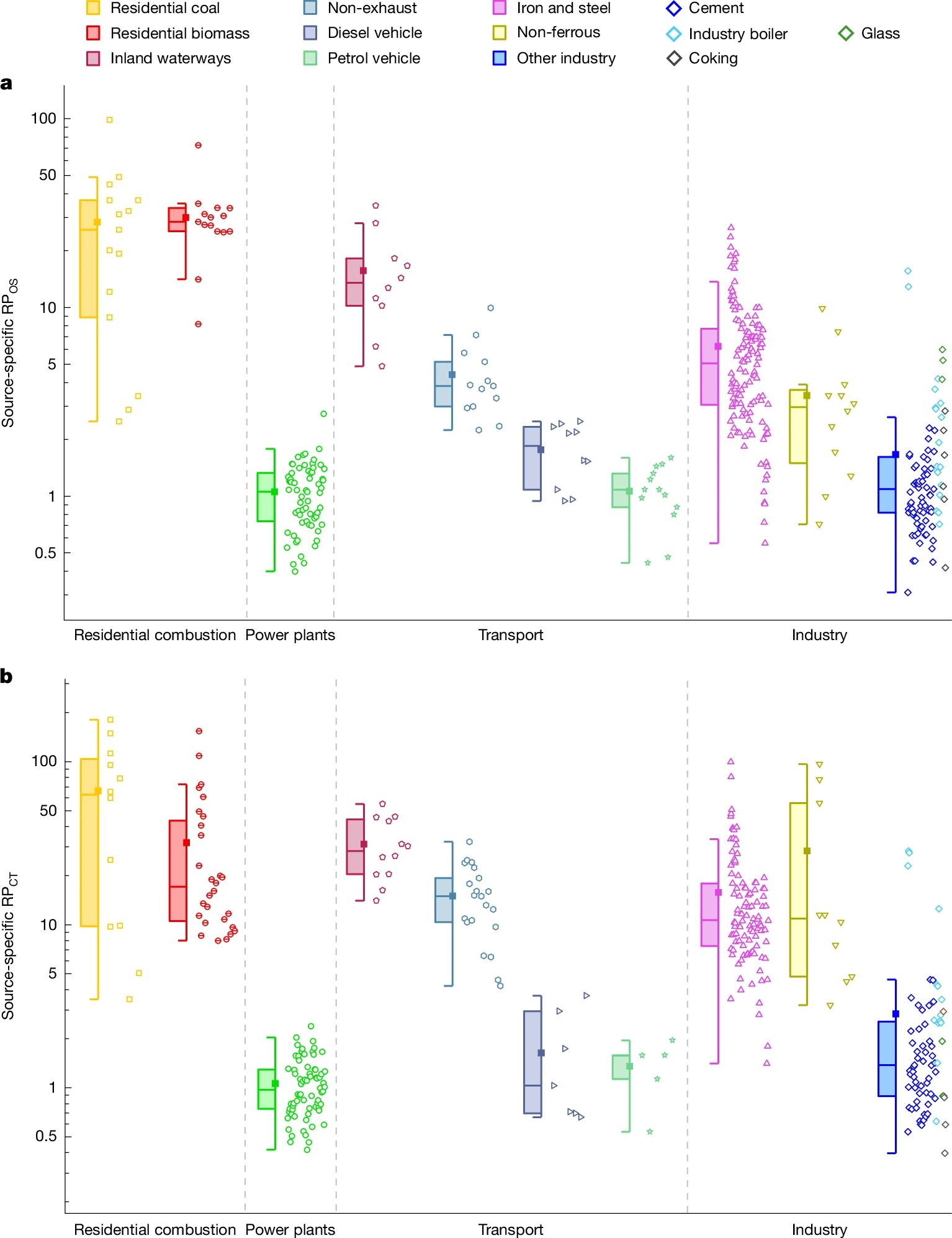
Figure 1. Reactive oxygen species (ROS) levels (a) and cytotoxicity (b) of PM2.5 emitted from major anthropogenic sources.
The study further highlights the success and evolution of China’s environmental policies. Between 2005 and 2021, nationwide air pollution control measures resulted in a 63% reduction in PM2.5 mass concentration and a 50%–60% decrease in toxicity emissions. Notably, while industrial emission reductions were the primary drivers behind the drop in total PM2.5 mass, approximately 80% of the reduction in toxicity-weighted emissions was attributed to the regulation of residential solid fuel combustion (Figure 2). By integrating these findings with chemical transport models, the researchers quantified the toxicity of primary PM2.5 exposure across various regions, offering differentiated, health-oriented policy recommendations.
By adopting a cross-disciplinary approach, the study provides novel evidence and conceptual pathways for addressing the “non-equivalent toxicity of fine particles.” These findings offer critical scientific support for transitioning PM2.5 management toward more precise health-risk control. Furthermore, the study provides a theoretical framework that can be applied to global air pollution mitigation and the protection of public health.
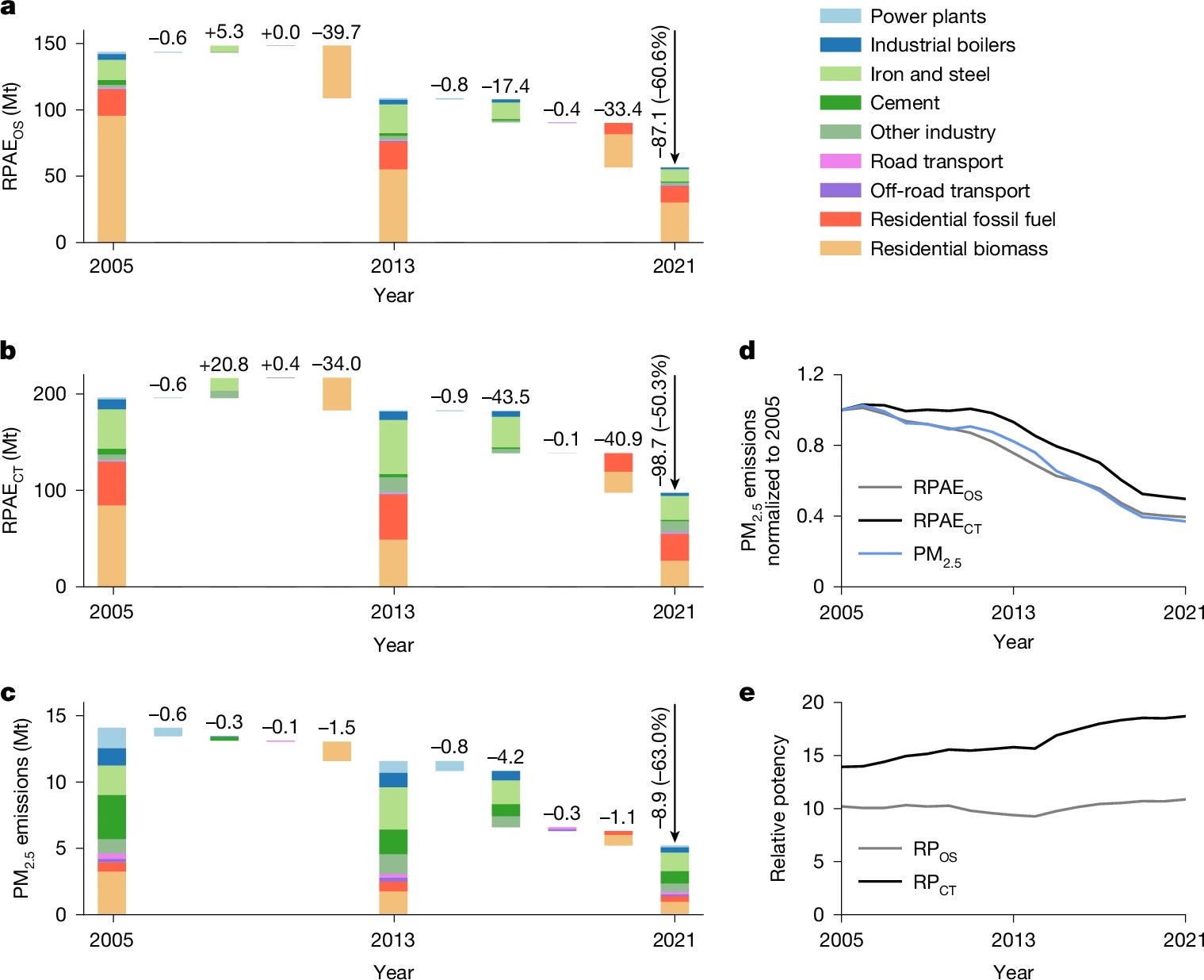
Figure 2. Trends and sectoral contributions of PM2.5 mass emissions and toxicity-weighted emissions in China from 2005 to 2021.
The co-first authors of the paper are Dr. Zheng Haotian (a 2021 PhD graduate of Tsinghua SOE and currently an Assistant Professor at Nanjing University) and Wu Di (Associate Researcher at Fudan University). Professor Wang Shuxiao and Professor Li Qing serve as the co-corresponding authors.
The research was supported by the National Natural Science Foundation of China, the National Key Research and Development Program, and the Xplorer Prize from the New Cornerstone Science Foundation, among other programs.
Paper Link:
https://www.nature.com/articles/s41586-025-09158-w