A research team led by Professor Jiang Jingkun from the School of Environment, Tsinghua University has investigated the complex molecular characteristics and seasonal variations of organic species in the urban atmosphere of Beijing. Using advanced mass spectrometry techniques, the study uncovered molecular characteristics, concentration patterns, and seasonal fluctuations of atmospheric organic molecules, significantly enhancing our understanding of the formation and evolution of atmospheric organic molecules.
Volatile Organic Compounds (VOCs) play a crucial role in the formation of ozone and fine particulate matter (PM2.5) in the atmosphere, subsequently affecting air quality, climate, and human health. The sources and atmospheric evolution of VOCs in the atmosphere are complex due to the coexistence of compounds from both primary emissions and secondary formation. Understanding their molecular characteristics is essential for studying their hydroxyl radical (OH) reactivities, ozone, and secondary organic aerosol (SOA) formation potentials. However, the complexity of these oxidation processes makes molecular identification challenging.
The researchers employed two complementary chemical ionization high-resolution mass spectrometers for long-term observation in Beijing: the Vocus Proton Transfer Reaction Time-of-Flight Mass Spectrometer (Vocus-PTR-TOF) and the Online Chemical Ionization Orbitrap Mass Spectrometer (CI-Orbitrap). This approach enabled the measurement of organic precursors, primary oxidation products, and highly-oxidized molecules (OOMs), broadening the range of identifiable atmospheric oxygenated organic molecules in terms of species and molecular mass.
The researchers employed the Vocus-PTR-TOF for the measurement of organic precursors and their primary oxidation products. Compared to traditional proton transfer mass spectrometers, the Vocus-PTR-TOF, with its enhanced sensitivity and mass resolution, was able to detect and analyze a wider range of species. In the m/z 50-200 mass range, 512 organic molecules were identified, with 44% of these species present at sub-ppt levels, and 38% containing 3 to 8 oxygen atoms. These newly identified oxygenated molecules were primarily moderate/semi-volatile organic compounds, many of which were the primary oxidation products of anthropogenic precursors like benzene and toluene, as well as natural precursors such as monoterpenes and terpenes. These compounds play a crucial role in the concentration of atmospheric oxygenated organic molecules, reactivity with hydroxyl radicals, and the formation of secondary particulate matter.
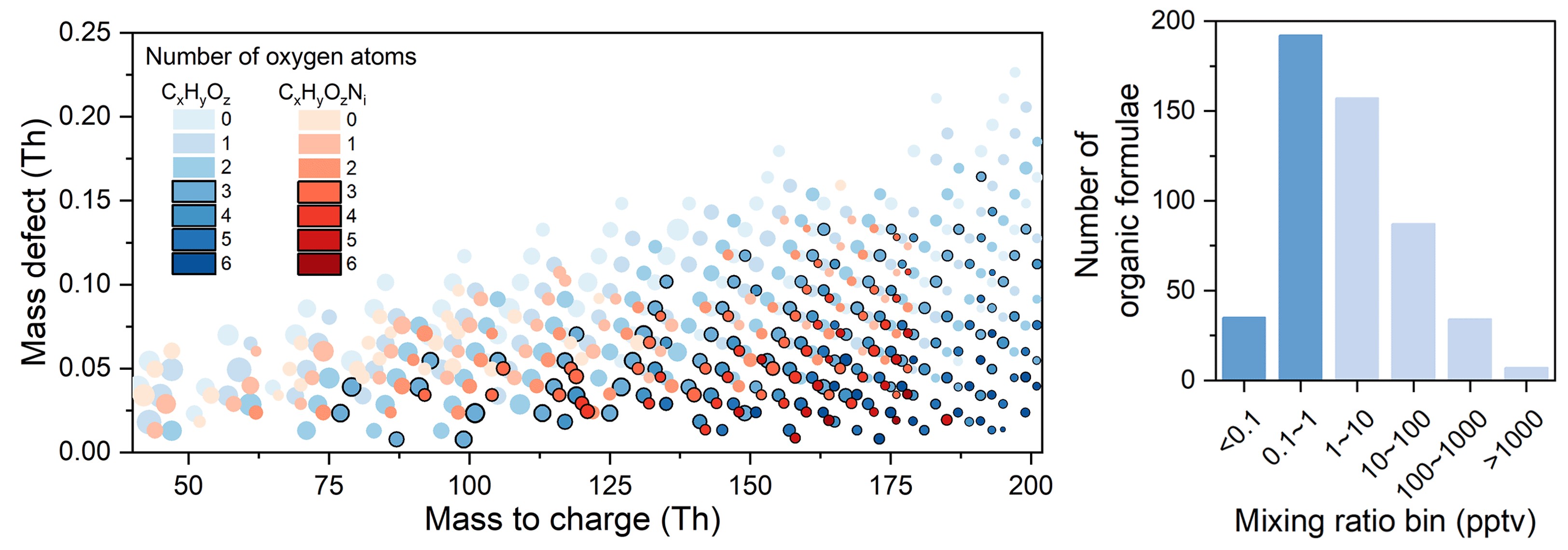
Figure 1. Measurement Results of Organic Precursors and Their Primary Oxidation Products in Beijing's Atmosphere Based on Vocus-PTR-TOF
In the atmosphere, organic precursors and their primary oxidation products undergo further oxidation, leading to the formation of higher molecular weight, more complex oxygenated organic molecules (OOMs). To study these OOMs, the researchers developed the CI-Orbitrap using nitrate ions and their clusters as reagent ions. Long-term measurements were conducted on the OOMs in Beijing’s urban air. In the m/z 200-600 mass range, 2,403 OOMs were identified, revealing distinct homologous and oxygenation patterns, reflecting the rich and complex oxidation processes in the atmosphere. Backtracking the precursor molecules, the team found that OOMs in Beijing’s air primarily originated from the oxidation of anthropogenic organic precursors, such as aromatic hydrocarbons and alkanes. Additionally, new particle formation-related OOM dimers and important intermediates like organic radicals in the OOM formation process were identified. These species, previously unreported in urban air studies due to technological limitations, provided new insights into atmospheric chemistry.
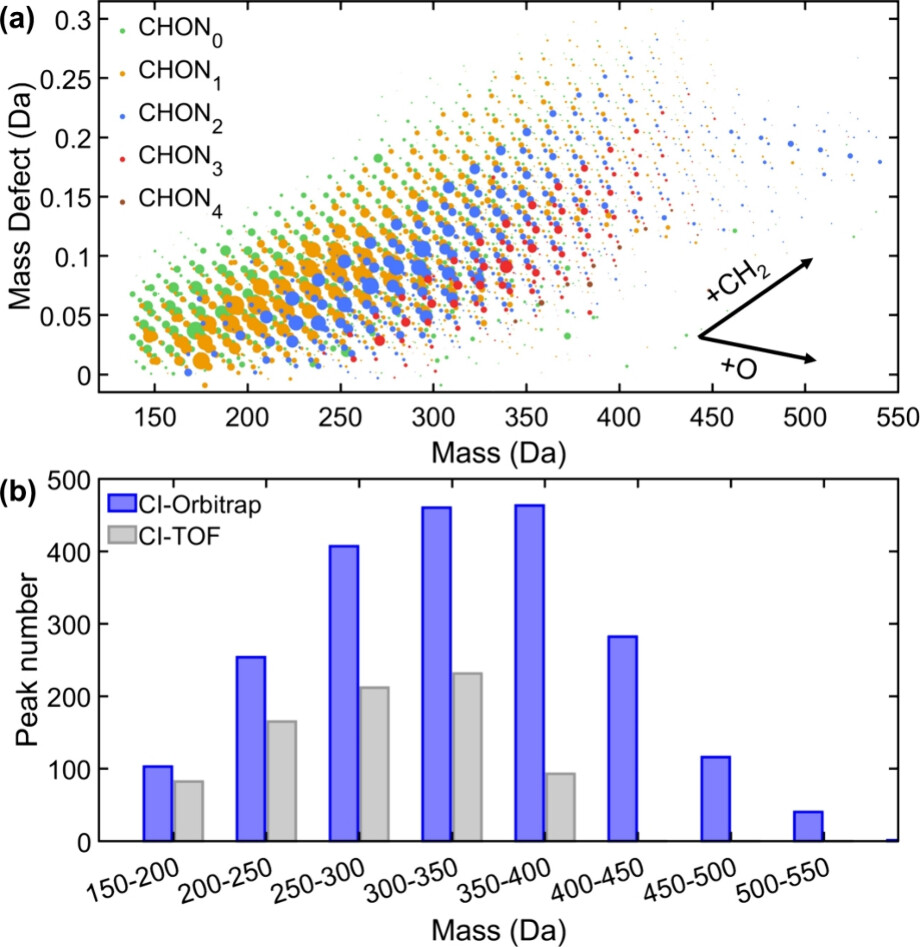
Figure 2. Measurement Results of Oxygenated Organic Molecules (OOMs) in Beijing's Atmosphere Based on CI-Orbitrap
The application of these advanced techniques allowed for the detection and resolution of species previously unreported in urban atmospheric studies, enhancing the resolution of the atmospheric organic aerosol formation pathway.
The findings were published in two papers: “Molecular and Seasonal Characteristics of Organic Vapors in Urban Beijing: Insights from Vocus-PTR Measurements” in Atmospheric Chemistry and Physics on December 12, 2024, and “Resolving Atmospheric Oxygenated Organic Molecules in Urban Beijing Using Online Ultrahigh-Resolution Chemical Ionization Mass Spectrometry” in Environmental Science & Technology on September 27, 2024. The first authors of the papers were Dr. An Zhaojin, a Ph.D. graduate from the School of Environment, and Yuan Yi, a Ph.D. student from the same school. The corresponding author was Professor Jiang Jingkun. The research involved collaborations with institutions such as Beijing University of Chemical Technology, Fudan University, Wuhan University, Nanjing University, Dalian University of Technology, Henan Normal University, University of Helsinki, Harvard University, and Aerodyne, USA. The study was supported by the National Natural Science Foundation of China and the Samsung Global Research Program.
Links to papers:
http://doi.org/10.5194/acp-24-13793-2024
https://pubs.acs.org/doi/10.1021/acs.est.4c04214