From July 10 to 11, the international workshop titled “Global LCA Platform: From Vision to Action” was successfully convened at the China-Italy Design Innovation Hub in Milan. This high-level seminar was co-organized by Tsinghua University, the United Nations Environment Programme (UNEP) Life Cycle Initiative (LCI), and the University of Padua. Supported by the “Carbon Neutrality and Energy System Transformation” (CNEST) multilateral cooperation project and the Carbon Footprint Industry Alliance, the event brought together 45 prominent experts and scholars from 27 institutions across 15 countries and five continents. The participants engaged in deep strategic dialogue to establish a vision and roadmap for a global Life Cycle Assessment (LCA) platform rooted in connectivity, interoperability, and mutual trust.
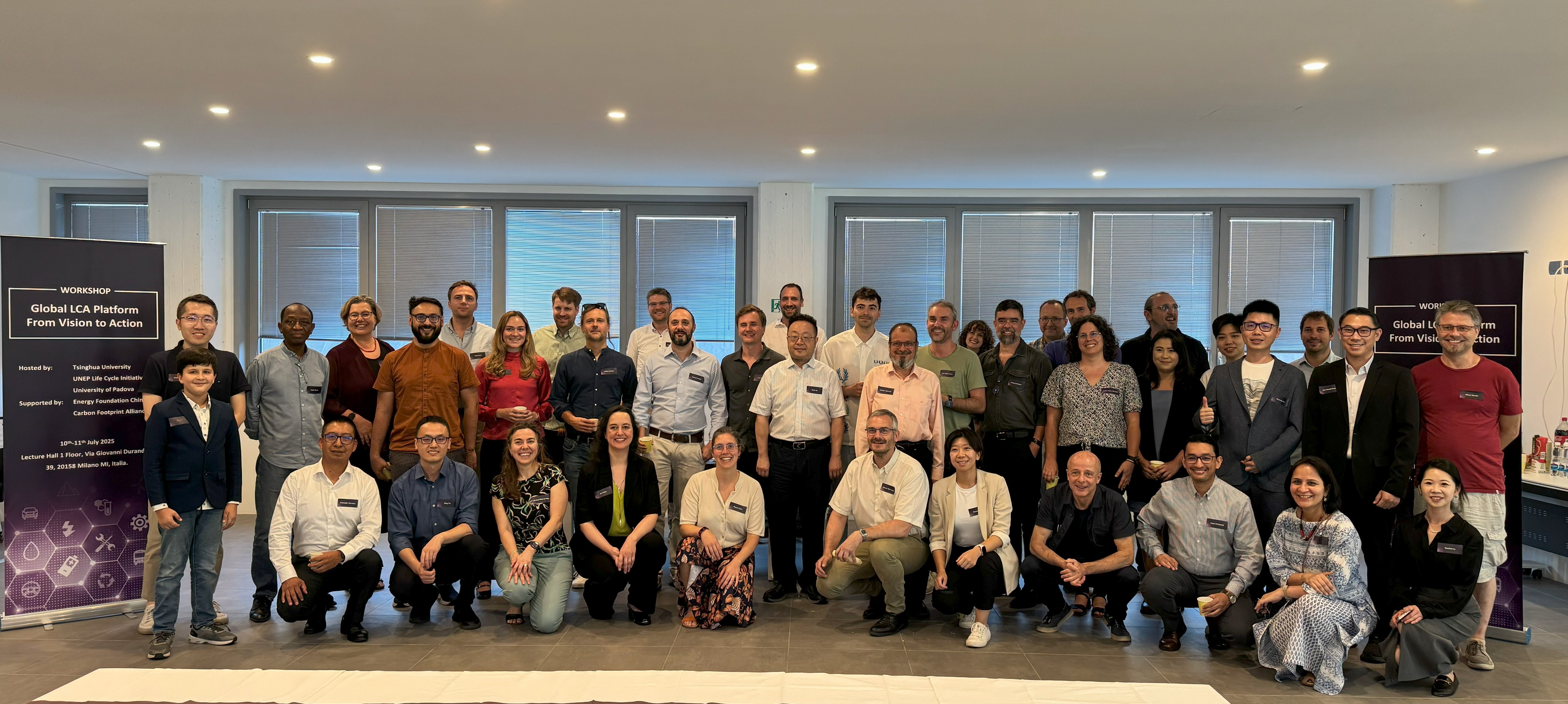
Group photo of the participants
The workshop’s diverse delegation represented a comprehensive cross-section of global stakeholders, including government bodies, academia, industry leaders, and international organizations. Key participating entities included the European Commission’s Directorate-General for Environment (EC DG Env), the Joint Research Centre (EC JRC), and the French Agency for Ecological Transition (ADEME), alongside national institutions from “Belt and Road” partner nations such as Brazil, Chile, Peru, South Africa, Saudi Arabia, and Thailand. Prestigious academic institutions including ETH Zurich, Leiden University, and the Technical University of Denmark (DTU) contributed their expertise alongside industry pioneers such as the ecoinvent Association, PRé Sustainability, Sphera, CarbonMinds, and Minviro.
In his opening address, He Kebin, Academician of the Chinese Academy of Engineering, Dean of the Institute for Carbon Neutrality at Tsinghua University, and Chairman of the Carbon Footprint Industry Alliance, emphasized that achieving carbon neutrality has evolved from a distant vision into an urgent global mission. He noted that constructing a globally interconnected LCA data ecosystem is a fundamental prerequisite for addressing the climate crisis, requiring the international community to consolidate consensus and synchronize actions to ensure that LCA functions as the bedrock of the global transition to net-zero.
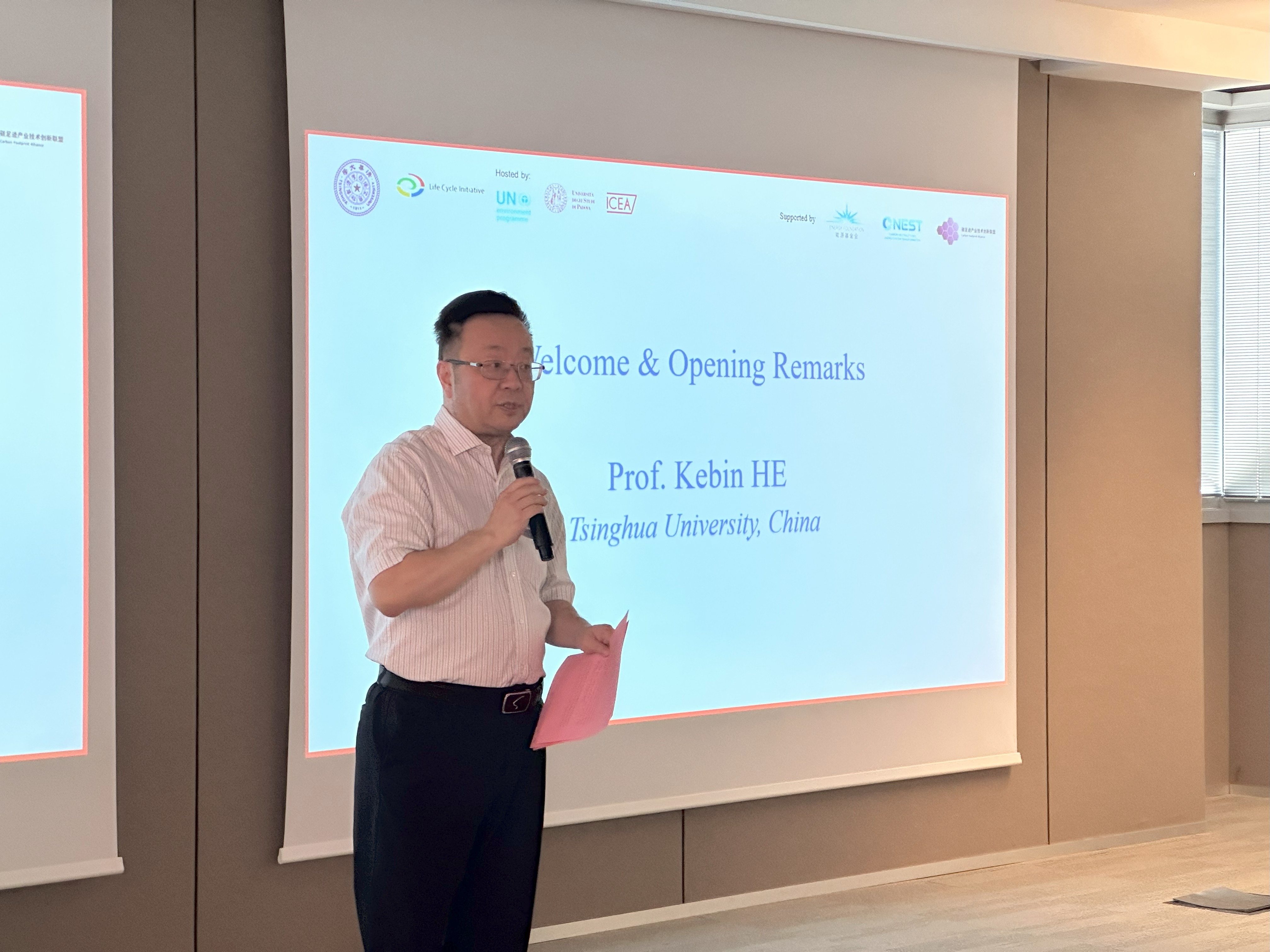
He Kebin delivering the opening remarks
This sentiment was echoed by Llorenç Milà i Canals, Head of the UNEP LCI, who underscored the necessity of cross-sectoral collaboration. He argued that a scientific, comprehensive, and forward-looking LCA data framework can only be realized through the collective efforts of international organizations, governments, and civil society to achieve true data interoperability.
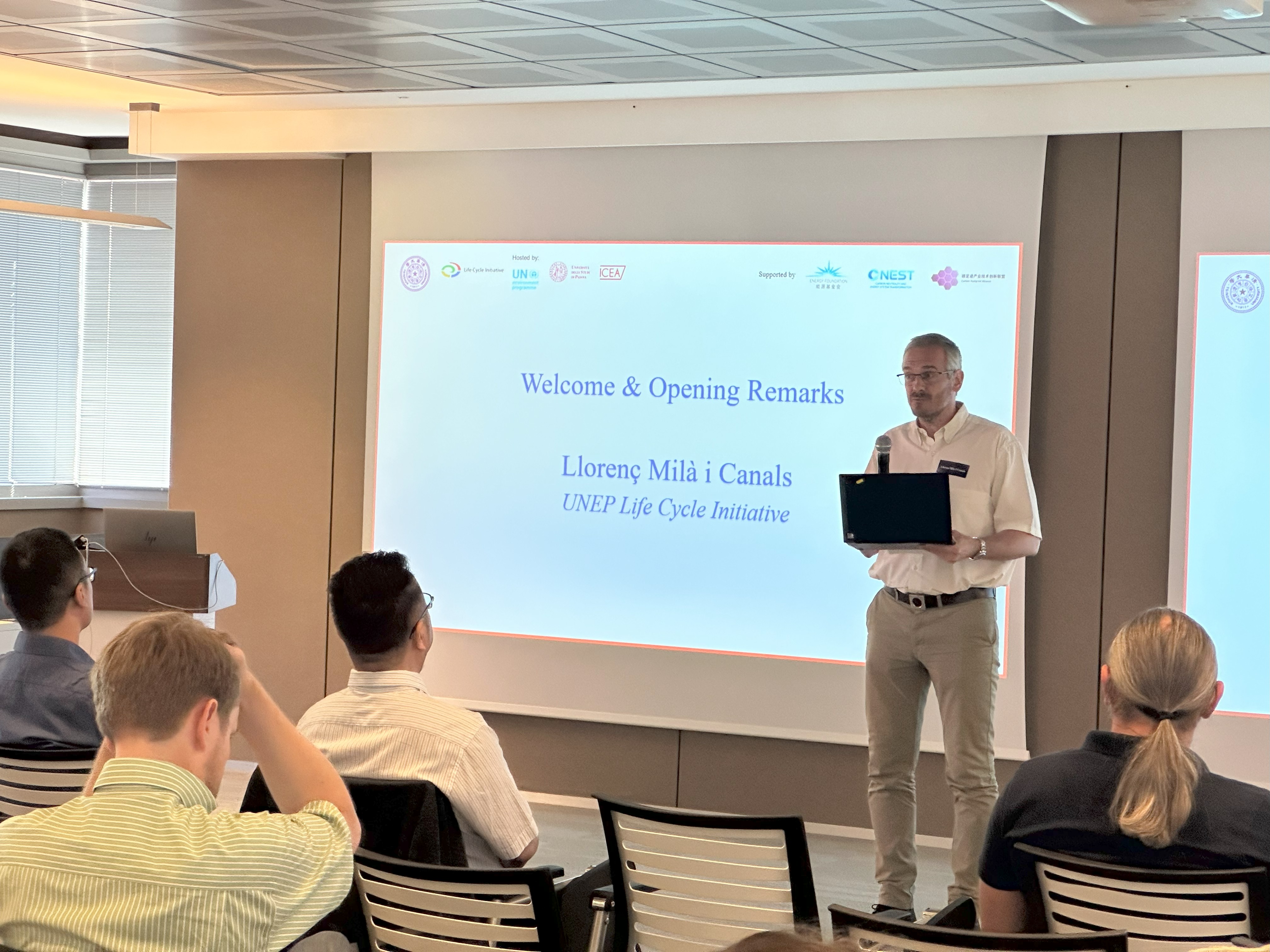
Llorenç Milà i Canals delivering his speech
Professor Xu Ming, Associate Dean of the School of Environment at Tsinghua University and Secretary-General of the Carbon Footprint Industry Alliance, delivered a keynote report outlining the progress of the Tiangong Initiative. Launched by Tsinghua University, the Tiangong Initiative aims to address the persistent challenges of data silos and trust in carbon footprinting. Professor Xu shared the latest innovations from the Alliance, specifically the Tiangong LCA Database System (TIDAS), as a scalable solution for global data integration.
Throughout the themed speeches and breakout sessions, experts deliberated on the technical architecture, data standards, and governance mechanisms required for a global platform. The discussions covered critical issues such as data security, mapping methodologies, and the establishment of global trust mechanisms. The consensus reached was that a global LCA platform serves as more than a technical tool; it is a vital vehicle for fostering international trust and facilitating pragmatic, transcontinental cooperation.
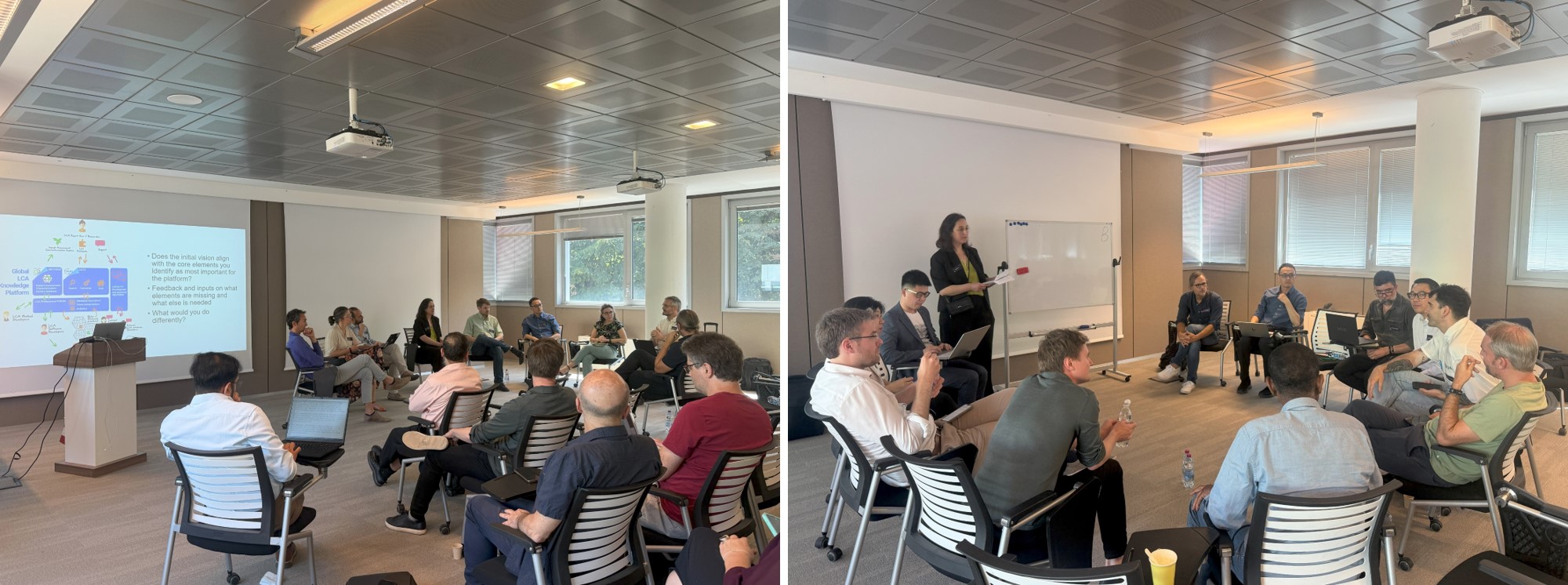
Venue of the thematic discussions
The successful conclusion of the workshop represents a landmark step toward a unified global LCA data landscape. The participants established a “Three-Step” strategic roadmap for the platform:
By 2025: Finalize the formation of international working groups and the overarching framework design.
By 2027: Deploy core technologies and digital tools.
By 2030: Fully realize an open, shared, and globally interoperable LCA data ecosystem.
Moving forward, the School of Environment at Tsinghua University will continue to champion the open-source strategy for LCA data and technology under the frameworks of the Carbon Footprint Industry Alliance and the Tiangong Initiative. The UNEP LCI has issued a global call for more institutions to join this collaborative effort, contributing the expertise and resources necessary to build a transparent and credible data ecosystem for the planet’s sustainable future.