Reverse osmosis (RO) membrane technology, a cornerstone of seawater desalination and wastewater reclamation, is vital for addressing global water scarcity. However, the precise structure of the polyamide selective layer under hydrated conditions and its relationship to membrane transport remain poorly understood. Recently, a research team led by Professor Huang Xia from the School of Environment at Tsinghua University, in collaboration with partners from Texas Tech University and Rice University, achieved a significant breakthrough. Using Cryo-Electron Tomography (Cryo-ET), the team visualized the 3D structure of the polyamide active layer at the nanoscale for the first time. Their findings, published in Science Advances, reveal a hollow “nodular” (vesicle-like) structure in the hydrated state and redefine the mechanism of water transport through these membranes.
Traditional observations of dry membranes typically show a “ridge-and-valley” morphology. However, the 3D reconstructions using Cryo-ET show that when swollen with water, the polyamide layer forms a vast network of hollow nodules (Figure 1). The team discovered that the average wall thickness of these nodules is approximately 17.2 nm. In contrast, under dry conditions, the corresponding “ridges” measure roughly 33.1 nm—nearly double the thickness. This suggests that the classic ridge structures seen in dry-state imaging are actually the result of hollow nodules collapsing upon dehydration. These nodules are directly connected to the underlying polysulfone support layer and can be categorized into independent, clustered, or platform-like structures.

Fig. 1. 3D structural analysis of dry and hydrated BW30 membranes using conventional and Cyro-ET techniques.
By analyzing the structural characteristics, the team divided the polyamide layer into two distinct regions: a Nodule Layer and a Dense Layer. The Nodule Layer, characterized by a high surface area index (~3.11), plays a far more critical role in mass transport than previously understood. Moving away from traditional transport models that treat the entire membrane thickness as a uniform resistance barrier, the researchers proposed a Nodule Transport Model. This model identifies the surface area index, nodule wall thickness, and relative density as the decisive structural parameters for water permeability. To validate this, the team conducted 3D reconstruction and performance analysis on 16 different synthetic membranes. The results showed a strong correlation (Spearman’s rank correlation coefficient ρ = 0.656) between the nodule parameters and actual water permeability, confirming the model’s accuracy and its potential to guide future membrane optimization.
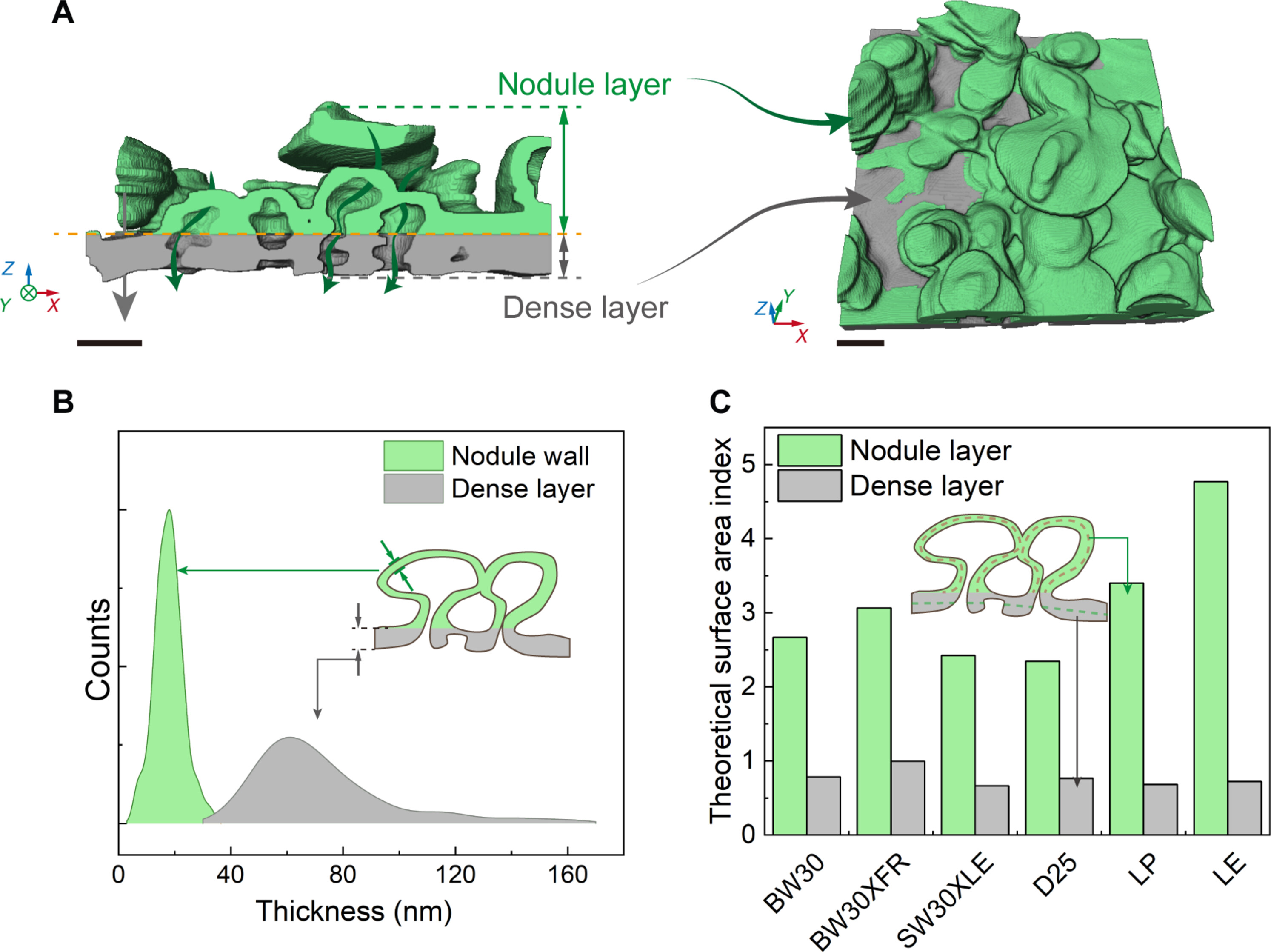
Fig. 2. The dense layer and nodule layer of PA membranes.
The study also provides insight into how these structures form. Observations revealed various stages of “pore” development at the base of the swollen membrane, ranging from “dimples” to “half-nodules” and “full nodules” (Figure 3). This suggests that nodule formation is likely driven by micro-nanobubbles generated during the interfacial polymerization process.
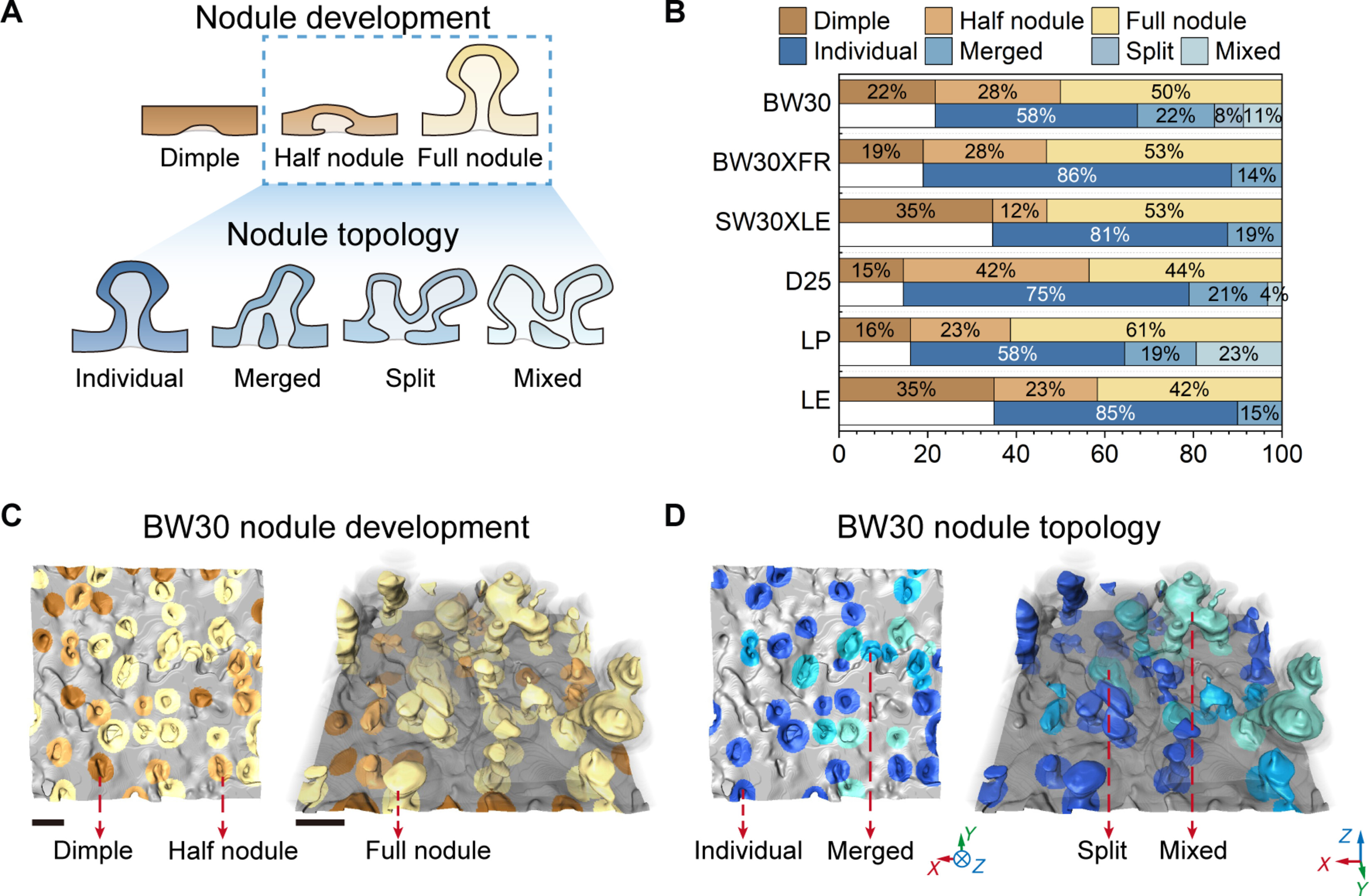
Fig. 3. The development and topology of nodules from the bottom crater of PA membranes.
This research marks the first time the true hydrated structure of polyamide membranes has been observed at the 3D nanoscale. By revolutionizing the mass transport mechanism model, the study provides a robust theoretical foundation for the design of the next generation of high-performance water treatment materials.
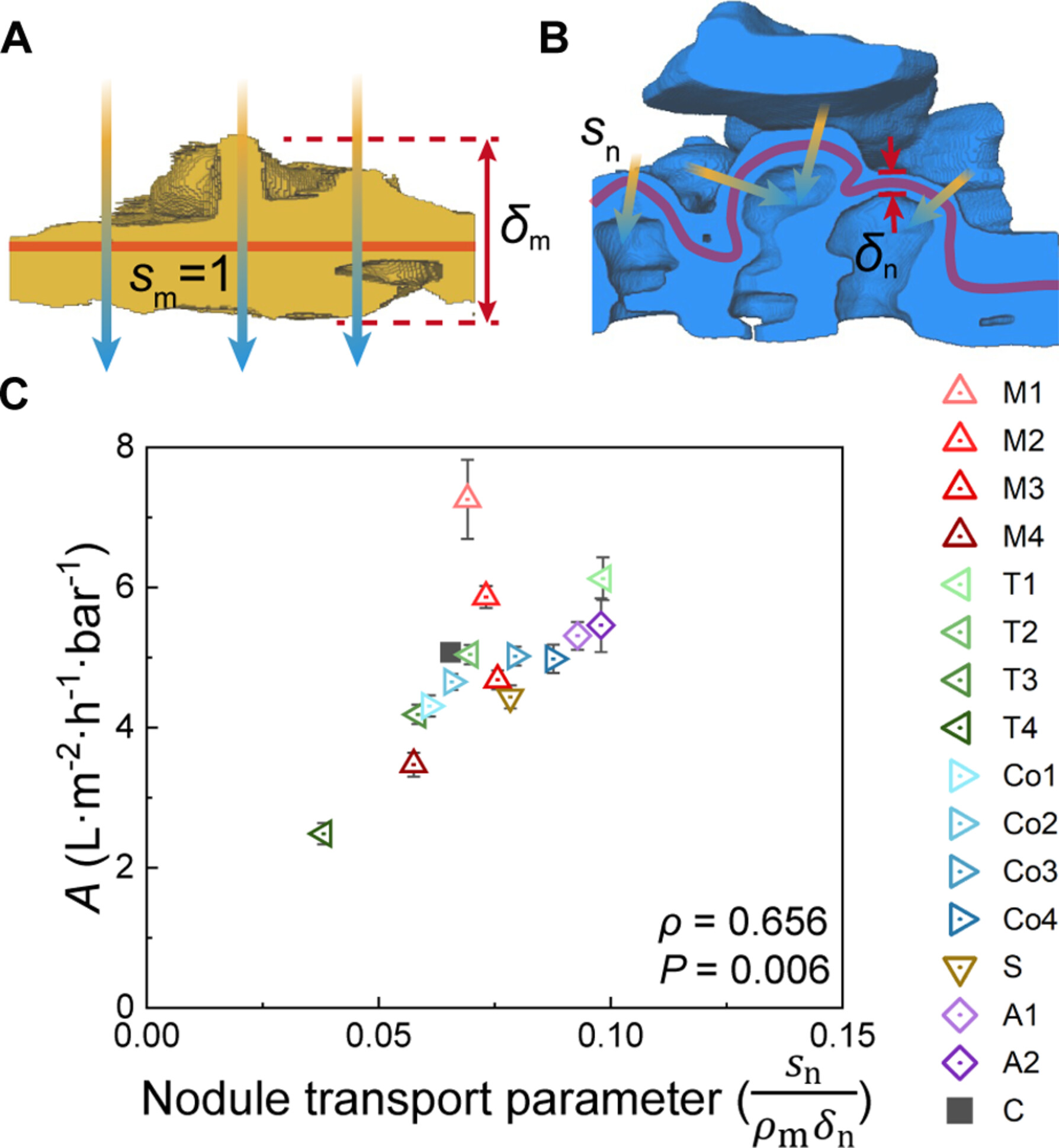
Fig. 4. Relating water permeance in PA membranes to nodular structure.
The findings were published online on May 2 in Science Advances under the title “Nodular networks in hydrated polyamide desalination membranes enhance water transport.” This follows a series of high-impact contributions by Professor Huang’s team in 3D reconstruction workflows and technological summaries previously featured in ACS ES&T Engineering (2024) and Environmental Science & Technology (2025).
Dr. Li Danyang (SOE PhD) is the first author. The corresponding authors are Professor Huang Xia (Tsinghua University), Professor Menachem Elimelech (Rice University), and Assistant Professor Shen Yuexiao (Texas Tech University). The research was supported by the National Key R&D Program of China.
Paper Link: https://doi.org/10.1126/sciadv.adt3324
Editor: Zhang Nannan